An IT Manager (a.k.a Information Technology Manager) oversees and manages IT operations, systems, and infrastructure. Additionally, they serve as a connection between technology strategies and the broader goals of the organisation.
As such, they a) ensure the efficient, secure operation of IT resources and b) nurture the overarching objectives of the business.
TL;DR
- An IT Manager (Information Technology Manager) keeps the organisation’s technology running reliably, securely, and cost-effectively—while translating leadership strategy into execution across operations, projects, people, and vendors. v2-IT Manager-Role_Responsibili…
- In practice, the role spans seven core areas: planning & alignment, team leadership, budgeting, project delivery, IT operations/ITSM (incl. SLAs), security & risk (incl. DR), and vendor/stakeholder management. v2-IT Manager-Role_Responsibili…
- High-performing IT Managers run IT like a service and track outcomes using metrics such as uptime, MTTR/MTTA, SLA compliance, change success rate, patch/vulnerability SLAs, CSAT, and cost per user/ticket. v2-IT Manager-Role_Responsibili…
- Salary varies by market and scope. In the US, this article cites $101K–$157K (median total ~$125,550). In the UK, it cites ~£42,500 average so far (with some London listings at £55,000+).
[Last updated: February 25, 2026 — Expanded the article with an at-a-glance role snapshot, a detailed responsibilities matrix (including KPIs and common tools/processes), and a dedicated IT Manager KPI framework to clarify how success is measured in real organisations. It now also contains refreshed salary framing by including both US and UK reference points and ensures the FAQ reflects the updated structure.]
Table of Contents
Common Types of IT Managers
- Infrastructure Manager
- Operations Manager
- Security Manager
- Project Manager
- Application Development Manager
- Service Manager
Depending on the organisation’s size, industry and specific requirements, it’s common to have a mix of these roles or even additional positions to meet the technology needs.
Get the IT Career Path Roadmap (Free PDF)
Want more than scattered ideas? Get our IT Career Path Roadmap PDF – an 8-step framework to map your next roles, sharpen your skills, and build a layoff-resilient tech leadership career. Fill in the form and we’ll send you the PDF version so you can download it, annotate it, and use it as a living plan for your next career moves.
Downloading the ebook does not automatically subscribe you to our bi-weekly Technology Leadership Newsletter.
IT Manager (IT Management): Quick Definition & Role Snapshot
An IT Manager leads the day-to-day delivery of technology services for a company. The role blends hands-on operational ownership (reliability, support, security, and delivery) with planning and prioritisation (roadmaps, budgets, vendors) to ensure IT enables business outcomes—not bottlenecks them.
What an IT Manager typically owns
- IT operations and support (service desk, incident response, SLAs)
- Infrastructure and core systems reliability (network, devices, cloud/on-prem)
- Security hygiene and risk management (patching, access control, DR readiness)
- Project delivery (scoping, vendor selection, rollout, adoption)
- Budgeting and vendor management (contracts, renewals, cost control)
- Team leadership (hiring, coaching, performance, process improvement)
Who they work with
- Reports to: often an IT Director, CIO, CTO, COO, or CEO (varies by company size)
- Partners with: department heads (Finance, HR, Sales, Ops), Security/Compliance, and vendors/MSPs
Typical scope (varies by organization)
- Team: 1–15+ IT staff (or oversight of an MSP + internal stakeholders)
- Environment: endpoints + identity + network + apps + cloud services
- Accountability: uptime, service quality, security posture, and delivery timelines
What this role is not (in most companies)
- Not primarily a hands-on SysAdmin role (though smaller companies may combine both)
- Not an executive strategy role like a CTO/CIO (IT Managers execute and operationalise strategy)
If you’re hiring for this role
Look for someone who can translate business needs into a practical roadmap, run reliable operations, manage risk, and lead people, without losing the ability to dive into technical decisions when needed.
The Key Responsibilities of an IT Manager
The IT Manager typically holds a mid-level managerial position and is responsible for the day-to-day management of the IT department.
Their role is more operational and tactical than that of a Chief Technology Officer, for example. IT Managers directly oversee IT operations. They are involved in day-to-day project management and team leadership while ensuring the reliability and security of IT systems.
They work closely with their teams to implement the strategies and decisions set forth by the CTO and senior management. Therefore, IT Managers are responsible for executing the plans and projects that align with the broader technology strategy.
The IT Manager also plays a critical role in optimising the use of resources. It’s their job to ensure that they are allocated effectively so that they can meet the organisation’s technology goals.
(Depending on the size and structure of an organisation, all of these responsibilities may fall under the CTO umbrella (eg, a start-up company). But as we scale up, we can have a CTO directly overseeing several IT Managers (eg, a cluster of subsidiaries or different IT departments) or a Group CTO overseeing a number of CTOs that oversee several IT Managers.)
The Overview of Common Responsibilities of an IT Manager with Breakdown
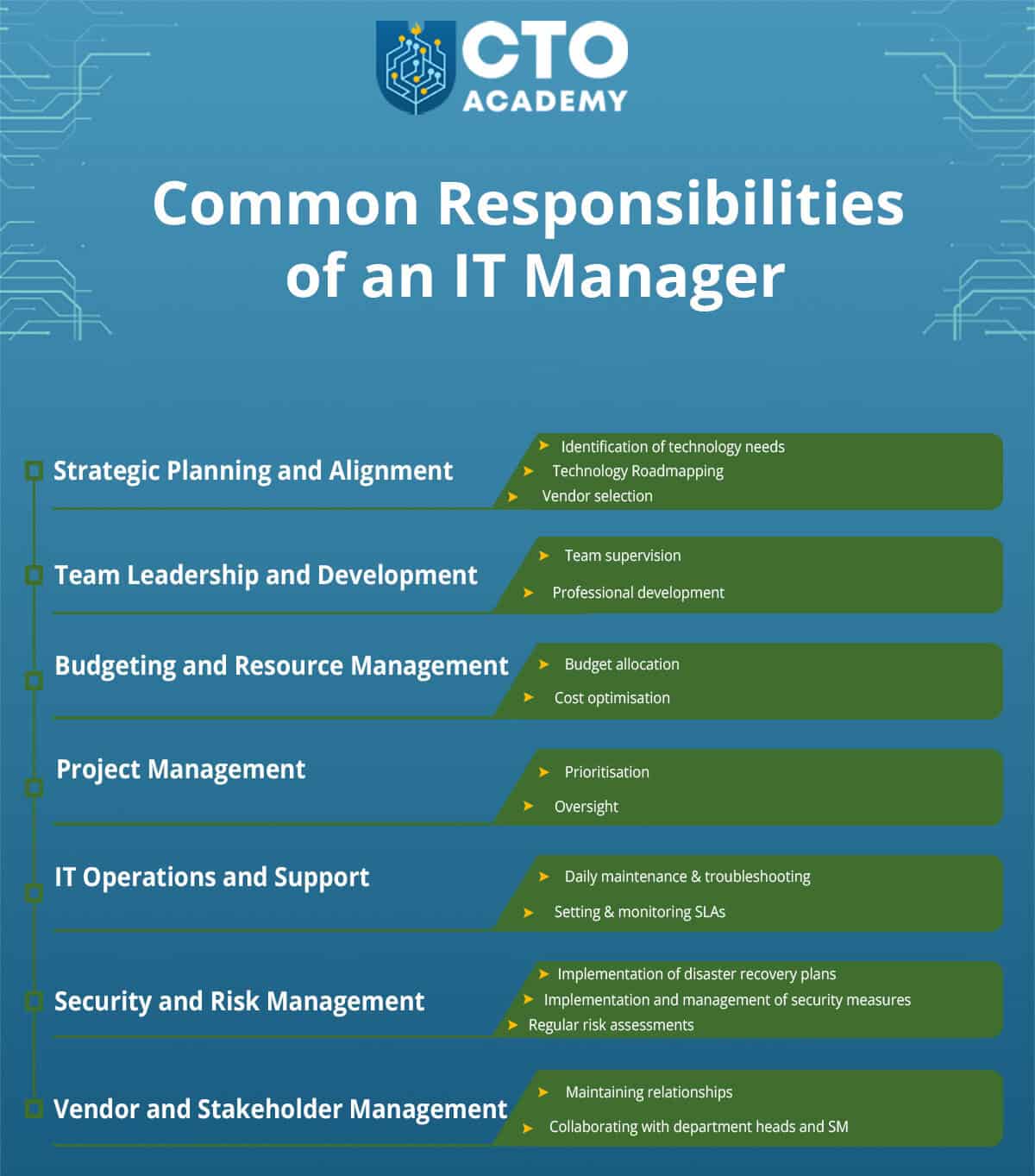
TABLE 1: IT Manager responsibilities matrix
| Responsibility area | What it includes (examples) | “What good looks like” (KPIs) | Common tools / processes |
|---|---|---|---|
| Strategic planning & alignment | Translate business goals into an IT roadmap; assess gaps; choose solutions; define priorities and timelines | Roadmap delivered on time; reduced tech debt; stakeholder satisfaction; measurable business impact | Roadmapping, RACI, stakeholder reviews, architecture notes, vendor scoring |
| Team leadership & development | Lead, coach, hire, and retain IT staff; assign ownership; set standards; run 1:1s and performance cycles | Reduced escalations; improved response times; higher team retention; clear ownership and documentation coverage | Team rituals (standups/1:1s), skills matrix, on-call rotation, runbooks |
| Budgeting & cost optimisation | Build budgets; forecast spend; manage renewals; optimise licenses/cloud; justify investments | Spend variance within target; reduced waste; predictable renewals; improved cost per user/ticket | Budget tracking, contract calendar, license audits, vendor negotiation |
| Project management | Plan and execute implementations/upgrades/migrations; manage scope, risks, timelines, and adoption | On-time/on-budget delivery; adoption targets met; low change failure rate | Project plans, RAID logs, change control, stakeholder comms, post-mortems |
| IT operations & support (ITSM) | Run service desk; manage incidents/requests; define SLAs; handle escalations; maintain asset inventory | SLA compliance; lower MTTR; fewer repeat incidents; higher CSAT; stable ticket volume | ITIL/ITSM, ticketing, SLAs, knowledge base, CMDB/asset management |
| Security & risk management | Access controls; patch/vulnerability management; backups; DR readiness; security awareness | Patch/vuln SLAs met; reduced security incidents; successful DR tests; backup restore success | IAM policies, least privilege, vulnerability scanning, DR/BCP runbooks |
| Vendor & stakeholder management | Manage MSPs/SaaS vendors; run reviews; enforce SLAs; align stakeholders and expectations | Vendor SLA adherence; fewer outages; improved delivery cadence; clear accountability | QBRs, SLA reviews, escalation paths, contract and compliance checks |
Tip:
In smaller companies, one IT Manager may own all areas; in larger organisations, responsibilities often split across specialised IT managers (e.g., Infrastructure, Operations, Security, Applications, Service Delivery).
IT Manager KPIs (How success is measured and “what good looks like”)
While the day-to-day can feel reactive, high-performing IT Managers run IT like a service: measurable, predictable, and continuously improving. These are the most common metrics used to evaluate performance:
Reliability & incident response
- Uptime/availability for critical systems (email, identity, network, core apps)
- Mean Time to Acknowledge (MTTA) and Mean Time to Restore (MTTR)
- Incident volume and repeat-incident rate (problem management effectiveness)
- On-call health (after-hours load, escalation frequency)
Service delivery & support quality
- SLA compliance (response and resolution times by ticket priority)
- Ticket backlog and average age of open tickets
- First-contact resolution rate and escalation rate
- User satisfaction (CSAT) and qualitative feedback trends
Change & project delivery
- Change success rate (and change failure rate)
- Deployment/rollout completion vs plan (milestones hit, scope controlled)
- Time-to-deliver for common requests (e.g., onboarding, access changes)
- Adoption and outcomes for major launches (usage, training completion, reduced manual work)
Security & risk management
- Patch compliance and vulnerability remediation within SLA
- Phishing simulation results/security training completion
- Access governance hygiene (least privilege, timely offboarding, MFA coverage)
- Backup/restore success and disaster recovery test results
Cost control & vendor performance
- Budget variance and spend predictability (licenses, cloud, contracts)
- Cost per user / per device / per ticket (trend over time)
- Vendor SLA adherence and escalation outcomes
- License utilisation and waste reduction (unused seats, overlapping tools)
Rule of thumb:
A strong IT Manager improves stability, speed, and security at the same time—while keeping costs predictable and stakeholders informed.
Let’s now break down responsibilities and explain them in more detail.
1. Strategic Planning and Alignment
Identification of technology needs
- Collaborating with department heads.
- Participating in discussions to understand the specific requirements of different departments.
Technology roadmapping
- Creating a technology roadmap that outlines the strategic direction for IT initiatives (short-term and long-term goals, technology investments and project timelines that align with the organisation’s growth plans).
Vendor selection
- Evaluating vendors, hardware and software options, taking into account factors like cost, compatibility and support.
- Making recommendations to senior management based on these evaluations.
2. Team Leadership and Development
Team supervision
- Assigning tasks, setting priorities and overseeing daily operations.
- Ensuring that team members have the tools and resources needed to perform their tasks effectively.
Professional development
- Investing in the professional growth of their team members by identifying training opportunities, certifications and skill-building activities.
- Encouraging team members to stay up-to-date with industry trends.
3. Budgeting and Resource Management
Budget allocation
- Managing the IT budget and allocating resources for various projects and operational needs.
- Balancing the allocation of funds to support current operations, ongoing maintenance and strategic initiatives.
Cost optimisation
- Evaluating costs and seeking opportunities to optimise spending (ongoing task!).
- Renegotiating vendor contracts, identifying areas for cost savings and ensuring that IT expenses align with the budget.
4. Project Management
Prioritisation
- Ensuring the alignment with the organisation’s goals and available resources.
Oversight
- Managing the full project lifecycle
- Defining scopes
- Creating project plans
- Allocating resources
- Regular monitoring of progress
- Budget tracking
- Communication with stakeholders
5. IT Operations and Support
- Daily maintenance and troubleshooting of IT systems.
- Setting and monitoring Service Level Agreements (SLAs) for IT support to ensure timely response and issue resolution and maintain high service availability.
6. Security and Risk Management
- Implementing and managing security measures to protect the organisation’s IT systems and data (eg. establishing security policies, ensuring firewall and antivirus protection, monitoring for potential threats…)
- Performing regular risk assessments and implementing disaster recovery plans.
7. Vendor and Stakeholder Management
- Maintaining relationships with technology vendors and service providers (includes negotiating contracts, reviewing performance, making recommendations for vendor selection or changes etc.).
- Collaborating with department heads and senior management and gathering feedback.
As we can see, a technology manager is a sort of an architect of an organisation’s technological success on one hand, but also a guardian of the IT infrastructure on the other. They also have to employ their managerial skills to ensure that employees execute their duties and, thus, achieve the goals.
In the absence of an adept IT manager, an organisation is left exposed to an array of issues, including system downtime, security breaches and scalability limitations, all of which affect the organisation’s bottom line.
Now let’s dig deeper into the most important – project management. We want to see HOW exactly they manage a new project that the CTO or the Board threw on their desk from scratch. It will also show the mesh of different responsibilities we explained earlier.
CASE STUDY: Setting the Stage for a New Project
They begin with…
Strategic Planning and Alignment
The first thing to do in this initial stage is to:
1. Identify the organisation’s technology needs
They start by initiating discussions with department heads, managers and key stakeholders across the organisation. These conversations are essential in this process. IT Managers actively listen to concerns, challenges and goals that different departments have.
Once they take all the notes, the next step is to assess and evaluate the technology stack and infrastructure. This includes examining existing software, hardware and network systems. You want to know the capacity, performance and, of course, security of current systems. In other words, you want to ensure that you have the necessary infrastructure to support the new product.
Once you get a good view of the environment, you should give yourself some time to assess those small parts of the entire infrastructure. Therefore, you must perform regular technology audits. Why? Because you want to identify areas where systems might be outdated, inefficient or not meeting new business requirements. As an IT Manager, you are going to use these audits to pinpoint technology gaps.
2. Now we start creating a technology roadmap
After the initial discussions and technology assessments, IT Managers gather feedback and input from their IT team members. Team members often have valuable insights into the organisation’s technology needs and can provide recommendations. They, after all, work in trenches and, thus, know exactly what they need to make things happen.
Once we have all the necessary information, it’s time to see if and where the new product fits in short- and long-term planning.
As a rule of thumb, we want to prioritise projects based on their alignment with business objectives and the available resources. For instance, short-term goals may include immediate technology updates, while long-term goals may encompass larger projects or technology transformations. As an IT Manager, you need to know how will the new product development affect the current state of affairs.
Most importantly, you need to figure out if it will pay off at the end of the road. Hence, the
3. Cost-Benefit Analysis
IT Managers must conduct cost-benefit analyses for each planned technology initiative. They consider factors such as potential return on investment, impact on operational efficiency and alignment with strategic goals. This analysis is crucial in decision-making.
More often than not, over-optimistic prognoses that are not based on realistic projections, lead to failure. You must, therefore, educate yourself in these matters if finances are not your forte.
For the sake of our argument, let’s say that the numbers clearly indicate profitability. It’s time to push the project into the next stage. Remember, all this time, the CTO is breathing behind your neck, pushing you to speed things up because the CEO is putting an immense amount of pressure to get the MVP out asap.
4. Vendor Evaluation and Selection
There are four logical steps in this stage. It all starts with market research.
One of the IT Manager’s jobs is to identify potential vendors and technology solutions. You want to explore all available options, of course, but they do have to meet the organisation’s specific needs.
Once you narrow down the list, it’s time to send RFPs (Requests for Proposals). Keep in mind that these documents must specify the organisation’s requirements and expectations. The more thorough you are, the more accurate response you’ll get. That is to say, if you send only a general inquiry or fail to mention some specific and/or important request or context, don’t expect well-structured and precise proposals.
Once you receive all proposals, it’s time to arrange events for vendor demos and presentations. It is the only viable way to evaluate the functionality, user-friendliness and suitability of a product or service. You should also invite key stakeholders and members of the IT team to participate in these evaluations.
Now comes the evaluation of those proposals. So what you should have in place even before presentations is evaluation criteria and some sort of scoring system. For example, consider factors such as cost, features, support and compatibility with the existing technology stack.
At the end of the day, this is just another ready-to-go project on your list of priorities. And that’s where things get tricky and really challenging.
Setting Priorities
If you have five projects, how do you decide the dynamics? Which gets the highest priority?
Again, there are three (to four, depending on how you look at it) logical steps.
1. Align project priorities with the organisation’s strategic goals
So the first order of business is to consult your company’s “Book of Goals”. Naturally, you want to start with those projects that will have the most significant impact on achieving those goals.
To do that efficiently, you should gather feedback on project priorities from department heads and managers. This collaborative approach ensures that the selected projects align with the needs and objectives of each department.
But there’s the question of resource allocation. This means that you must:
2. Reassess available resources
Having goals is great, but if the budget is stretched, you need to reevaluate everything (ie, finances, personnel, time…). It is the only way to determine which projects can be realistically executed within the given constraints.
Still, you have to ensure that the gain always outweighs the risk. Hence, the final step:
3. Risk assessment
IT Managers assess the risks associated with each project. They consider factors such as potential disruptions to existing systems, cybersecurity risks and the likelihood of successful implementation.
These analyses are as thorough as possible and include a detailed assessment of every possible scenario. In Module 3 of our Digital MBA for Technology Leaders, for example, Ricardo Alanis, Head of Data Science at Nowport, goes into detail on risk and resiliency. The lecture leans on several others throughout modules that guide CTOs through high-level project management. Definitely something every aspiring IT Manager should consider as a part of a future executive education and subsequent career growth.
You can see where all the complexity is coming from and why not everyone is cut out to work as an IT Manager, at least not a successful one. And here is a vivid presentation of day-to-day challenges:
If you have, for instance, projects: A, B, C, D and E, you must run each against:
- Strategic goals
- Departmental needs and objectives
- Available resources (internal and external)
- Viability
- Risk
So let’s say that A, C, D and E projects perfectly align with the company’s strategic goals. But after you consult department heads, E simply drops off. So A, C and D make the initial cut.
All three are viable meaning that you can develop an MVP of each using the available technology stack and third-party resources (vendors’ solutions). But, you can’t work on all three simultaneously due to budgetary and/or personnel constraints. If, however, you choose smart, you could, potentially, run two parallel projects but with one that has the highest-priority tag attached to it.
There are two ways to figure out which project should have the highest priority
The easier way is to simply sort all three based on the level of risk they are carrying and pick the two with the lowest risk score (the “safest” being assigned as the highest priority project). But consider this: as a rule of thumb, “safest” is also “least profitable” or “slowest”.
Hence, the harder way. Take a calculated risk and choose the one that would most benefit the company. Hit it with the “HIGHEST PRIORITY” stamp and bring the “safest” one to the fold also.
This way, you will not: a) appear as someone who hesitates or plays safe (which is not exactly a characteristic of an executive of any kind!) while, at the same time, b) overstretch your team and cause burnouts.
Which brings us to the next logical question.
What Makes a Good IT Manager?
Information technology management requires a perfect blend of six skill sets:
- Technical skills
- Management skills
- Soft skills
- Operation management
- Marketing management
- Sales management
While marketing and sales management skills can be rudimentary, technical skills must be at the highest level possible. We are talking about the whole package here as you will soon find out.
Technical skills
- Exceptional technical proficiency
- Infrastructure and systems management
- A strong grasp of cybersecurity principles and best practices
- Knowledge of software development practices, programming languages and application lifecycle management
- Familiarity with cloud platforms
- Understanding of data management and analytics
- Experience with networking concepts, protocols and technologies
- Understanding of IT service management frameworks (eg, ITIL)
- Knowledge of virtualisation technologies and containerisation platforms
- Familiarity with various operating systems
- Proficiency in managing hardware components and end-user devices
- At least basic scripting skills
The same goes for management and soft skills. This is a skill set that is forged through experience above anything else because the list is quite challenging for some.
Management and soft skills
- Strong leadership skills, strategic thinking abilities and emotional intelligence
- Clear and effective communication skills
- Strong problem-solving and decision-making skills
- Adaptability
- Effective team and project management
- Conflict resolution and negotiation skills
- Efficient time management skills
Operational skills
And then come operational skills. They involve the day-to-day activities such as:
- IT Operations Management
- Monitoring system performance.
- Managing system updates and patches.
- Implementing and enforcing IT policies and procedures.
- Incident Response and Problem Resolution
- Creating and implementing incident response plans.
- Conducting root cause analysis.
- Coordinating with support teams for issue resolution.
- Service Level Management
- Defining and monitoring Service Level Agreements (SLAs).
- Continuously improving service delivery.
- Capacity Planning
- Monitoring resource utilisation.
- Forecasting capacity needs.
- Planning for scalability.
- Change Management
- Developing and enforcing change management processes.
- Communicating changes to relevant stakeholders.
- Mitigating risks associated with changes.
- Vendor Management
- Selecting and evaluating vendors.
- Negotiating contracts.
- Ensuring vendor performance meets expectations.
- IT Asset Management
- Conducting regular asset audits.
- Managing hardware and software inventories.
- Optimising asset utilisation.
- Documentation and Reporting
- Documenting IT processes and procedures.
- Creating regular reports on system performance, incidents and changes.
- Compliance and Security Management
- Implementing and enforcing security policies.
- Conducting compliance audits.
- Responding to security incidents.
- Disaster Recovery Planning
- Creating and testing disaster recovery plans.
- Identifying critical systems and data for recovery.
- User Support and Helpdesk Management
- Managing support staff.
- Ensuring timely resolution of user issues.
- Implementing self-service options.
- Time Management and Prioritisation
- Prioritising tasks based on urgency and importance.
- Balancing operational demands with strategic initiatives.
The ability to balance operational efficiency with long-term strategic goals is key to success in this role.
Sales and marketing skills
Now, regardless of what you might think, sales and marketing skills are necessary because a good IT manager should have a customer-centric mindset. It’s irrelevant whether their “customers” are internal employees or external clients. One way or another, they need to understand and meet the needs of end-users. And that is only possible if you know how marketing and sales work.
Of course, the ideal candidate will also have at least a bachelor’s degree in computer science plus a high-level leadership education (ie, a master’s degree in technology leadership).
To Whom Do IT Managers Report?
Reporting largely depends on the size of an organisation, industry and strategic goals. In other words, it depends on the structure of the company. That said, IT managers can report to either of the following executives:
- Chief Information Officer (CIO)
- Chief Technology Officer (CTO)
- Chief Operating Officer (COO)
- Chief Executive Officer (CEO)
- IT Director
The Average Salary of an IT Manager
In the US, IT managers make between $101K and $157K. The base salary ranges from $94K to $143K while bonuses add between $7K and $14K. Hence, the annual median total pay is around $125,550 while the average for 2023 is $115,944.
In the UK, on the other hand, the average annual salary so far was approx. Ł42,500 (based on 152 reports). However, available job listings indicate that this might change for the better. For example, several London-based companies are currently offering permanent positions with a minimum of Ł55,000.
Key Takeaways
- An IT Manager is the operational leader of IT delivery, responsible for keeping systems stable and secure while executing strategy day-to-day.
- The job is best understood as a portfolio of responsibilities, not a single function: operations, projects, security, people leadership, budgeting, and vendors all sit under the umbrella.
- The “how” matters: successful IT Managers use structured decision-making—needs discovery, environment assessment, roadmapping, cost-benefit analysis, vendor evaluation, prioritisation, and risk assessment.
- Great IT Managers measure outcomes, not activity, using KPIs across reliability, service delivery, change/project delivery, security, and cost control.
- The role demands a hybrid skill set: deep technical breadth + strong leadership/communication + operational discipline (ITSM, incident/change/capacity management).
- Career-wise, the role often serves as a launchpad toward IT Director and ultimately CTO, as scope expands from execution into higher-level ownership and strategy.
- Compensation depends heavily on region and scope.
Conclusion
Becoming and working as an IT manager is undoubtedly challenging, but is also rewarding because it sets the stage for the next step on a career path and that’s the role of a Chief Technology Officer. It’s the crown of years of effort, hardship, experience and personal development.
And the best route to that executive role is direct access to other CTOs, their experience and perspectives. Having such a peer advisory group by your side at all times not only makes your job and life easier but also speeds up career growth.
Think about it; why walk alone in the darkness trying to find your way out of the woods when you have a ten-thousand-strong global community of technology leaders to guide you?
Frequently Asked Questions (FAQ)
What is an IT Manager?
An IT Manager oversees and manages IT operations, systems, and infrastructure, and connects technology execution to broader organisational goals.
What are the main responsibilities of an IT Manager?
Common responsibility areas include strategic planning and alignment, leading and developing the IT team, budgeting and resource management, project management, IT operations and support, security and risk management, and vendor/stakeholder management.
Is the IT Manager role more strategic or operational?
It’s typically more operational and tactical than executive roles (e.g., CTO). IT Managers translate strategy into execution and ensure daily reliability and delivery.
What does “strategic planning and alignment” mean for an IT Manager?
It usually includes identifying technology needs with stakeholders, creating an IT roadmap (priorities, timelines, investments), and evaluating/selecting vendors and solutions that fit business goals and constraints.
How does an IT Manager manage projects from scratch?
They generally start by clarifying business needs, assessing the current environment and gaps, building a roadmap, running cost-benefit analysis, evaluating vendors (RFPs/demos/scoring), and then prioritising work based on strategic fit, resources, viability, and risk.
What skills make a good IT Manager?
A strong IT Manager combines technical breadth (infrastructure, cybersecurity, cloud, networking, ITSM), leadership and communication (team management, decision-making, conflict resolution), and operational discipline (incident response, change management, capacity planning, compliance, documentation).
Why are “sales and marketing skills” mentioned for IT Managers?
Because effective IT management often requires a customer-centric mindset—understanding and meeting the needs of end users, whether they’re internal teams or external clients.
Who does an IT Manager report to?
It depends on company structure, but IT Managers commonly report to leaders such as the CIO, CTO, COO, CEO, or an IT Director.
What is the average salary for an IT Manager?
In the US, the article cites a broad range (roughly $101K–$157K), with a cited median total pay of around $125,550 and an average (for 2023, as referenced) of around $115,944.
What’s the next career step after IT Manager?
The role often sets the foundation for more senior leadership paths (e.g., IT Director and, eventually, CTO), especially as scope expands from operations into strategy, ownership, and business impact.
What are the common types of IT Managers?
Depending on organisation size and needs, common variants include Infrastructure Manager, Operations Manager, Security Manager, Project Manager, Application Development Manager, and Service Manager.